
iRI Presentation Recognition
Cognitive Resilience Microglial Signature (CRMS): A Protective Response to Alzheimer’s Disease Neuropathology
Alzheimer's disease pathology does not invariably result in dementia, suggesting the existence of protective mechanisms, as exemplified by individuals termed "Superagers." This study aimed to define microglial transcriptional programs associated with cognitive resilience, to quantify differences between homeostatic and disease-associated microglial (DAM) states, and to determine whether resilience-associated signatures are specific to microglia. We identified a 63-gene signature associated with cognitive resilience, with LINC01242 emerging as a candidate biomarker.

iRI Presentation Recognition
Systematic Analysis of Underrepresented Biological Pathways: Clinical Biomarker Coverage
The majority of newly discovered biomarkers fail to progress to clinically validated diagnostic tests. In this study, we quantified this translational gap across 744 disease- associated biological pathways and found it to be pervasive, with comparable severity in common and rare diseases alike. Focusing on Alzheimer's disease, Parkinson's disease, and Bardet-Biedl syndrome, we identified specific genes with substantial potential as novel diagnostic targets.

iRI Presentation Recognition
Multi-Study Inference of Biological Domains Associated with Spaceflight Bone Degradation
Spaceflight-induced bone loss is conventionally attributed to impaired osteocyte mechanosensing; however, the contribution of the bone marrow microenvironment remains insufficiently characterized. In this study, we evaluated whether marrow biology contributes to skeletal deterioration during spaceflight by integrating skeletal phenotyping, bone marrow single-cell RNA sequencing, proteomic profiling, and ground- based disuse models. We observed femur-predominant bone loss accompanied by increased marrow adiposity, suppressed translation and oxidative phosphorylation, and alterations in stromal and immune cell populations. Collectively, these findings implicate marrow-niche and osteoimmune pathways in spaceflight-associated bone loss, extending the prevailing mechanosensing-centered framework.

ISEF 2026 Finalist
Co-expression Networks Regulate Nuclei Size in Human Breast Cancer Tissue Cells
Breast cancer (BC) is the most common cancer in women and the second leading cause of cancer-related death worldwide. High mortality rates are partly driven by an incomplete understanding of BC heterogeneity, limiting the development of effective targeted therapies. In BC, increased nuclear size is a tumor aggressiveness indicator. This study leveraged high-resolution histopathology images and single-cell RNA sequencing data to identify nuclei-size-associated pathways, providing new insights into drivers of tumor aggressiveness. Co-expression analysis uncovered networks linked to oncogenic pathways, with one gene set showing strong associations with nuclear size. miRNA analysis identified hsa-miR-615-3p as a potential regulator of EPDR1, suggesting a role in nuclear size in BC and highlighting potential biomarkers for future investigation.

3rd place at ISEF 2026
Characterizing Chlamydial Cytotoxins as Inflammatory Modulators: C. Muridarum and C. Trachomatis Putative Glycosyltransferase Activity and NF-kappa B Regulation

iRI Presentation Recognition
Optimizing Enzyme Thermostability: Plastisphere Enriched Genes for Plastic Degradation
Plastic production exceeds 359 million tons annually, and plastic-degrading enzyme (PDE) activity declines under industrial thermophilic conditions. Genes of 26 thermophilic PDEs were clustered, finding pathways controlling cellular stress response overexpressed in 100% of thermophilic PDEs vs. only 20% of non-thermophilic PDEs (p<0.05).

iRI Presentation Recognition
The Instigator of Type 1 Diabetes Mellitus (T1D): Connecting Human Leukocyte Antigen (HLA) with Infant Gut Microbiome
Type 1 Diabetes (T1D) is influenced by genetics and other factors, but the role of gut bacteria in its development remains unclear. Children with high-risk HLA genes generally had fewer beneficial bacteria; the findings suggest that disruptions in gut bacteria alongside genetic factors may contribute to T1D development.

iRI Presentation Recognition
An Alternative Composite Score to Determine Breast Cancer Recurrence Probability
Breast cancer (BC) recurrence is difficult to predict using machine learning techniques due to a lack of patient data. A calibrated Gradient Boosting Classifier was trained to predict recurrence scores using easier-to-access data, accurately (90%) predicting BC recurrence risk as a viable alternative to the widely-used Oncotype DX score.

iRI Presentation Recognition
Early Depression Risk Prediction in Older Adults
Depression affects 5.7% of adults over 60, with over 50% of cases going undiagnosed. This study employs multiple machine learning models to predict early depression risk in adults aged 65+ based on demographic, physical, and cognitive health factors, while identifying and significantly reducing algorithmic bias through reweighting.
iRI Presentation Recognition + iRI Paper Recognition
Infant Allergy Risk: The Role of Food Introduction on the Gut Microbiome
The development of food allergy (FA) and corresponding gut microbiome changes are influenced by the timing of infant solid food introduction. This microbiome analysis assessed how food selection and timing affected FA risk using the infant longitudinal DIABIMMUNE cohort. On average, earlier food introduction (<6 months) correlated with increased allergic activity, suggesting revisions to infant food introduction guidelines.

Regeneron STS Scholar 2023
Associations Between Pathophysiological Traits and Symptom Development in V30M and V122I Transthyretin Amyloidosis
Mutations of the TTR gene cause a disease known as ATTR, in which aberrant TTR proteins discreetly accumulate in various organs before suddenly causing irreversible damage. Unfortunately, ATTR is understudied; by the time most patients receive the proper diagnosis, it is often too late, and many must receive expensive organ transplants. However, previous science has hypothesized that asymptomatic ATTR patients may present early warning signs before the heavy disease onset. Hence, my research sought to determine the “red flags” in the body, such as specific blood markers and organ illnesses indicative of ATTR presence. By analyzing large databases of patients with and without TTR mutations, I determined that particular T cell signals, blindness, and arrhythmic heart patterns are significantly more common in patients with ATTR. Many of these symptoms are discoveries that expand the knowledge base for clinicians to diagnose ATTR better. Understanding the sophistication of disease development and catching onto the body’s red flags can help clinicians diagnose ATTR patients and begin earlier treatment options. Such differences can make or break patient survival, especially among those most marginalized in the healthcare system.

iRI Presentation Recognition
Unraveling a circRNA-miRNA-mRNA Axis: A Potential Therapeutic Target for Non-Small Cell Lung Cancer (nsCLC)
Non-small cell lung cancer (NSCLC) is a leading cause of cancer-related deaths, primarily due to its low early detection rate of approximately 19%. This study revealed that CircFNDC3B, by targeting miR-885-3p, significantly impacts NSCLC survival (p=0.011), establishing a correlation between the CircFNDC3B-miR-885-3p-MCM5 axis and NSCLC survival, potentially improving early detection methods.

iRI Presentation Recognition
Gene Expression Comparisons in Primary, Murine, and iPSC-Derived Microglia to Establish Ex Vivo Identity in In Vitro Models
The advancement of accurate microglia models is essential for developing treatments against incurable neurodegenerative diseases. Gene expression comparisons identified SALL1, a critical transcriptional regulator of microglia identity, and NR4A1, a transcription factor that activates SALL1, as exhibiting significant expression differences, suggesting the need to target NR4A1 to increase SALL1 levels in in vitro models.

iRI Presentation Recognition
Robotic Texture Perception
Considerable advancements have been made in robotic technology to mimic human behavior, but implementation of human perception intelligence still lacks significantly in texture recognition, which is key to improving robotic hands' grasping capabilities. Machine learning is used to develop a predictive model to recognize material textures using haptic components, improving grasping strategies and advancing robotic manipulation and human-robot interactions.

iRI Presentation Recognition
Facilitating Differential Diagnosis of Sleep Disorder Subtypes with Neural Aperiodic Components
Polysomnography is a highly inefficient test for diagnosing sleep-related hypermotor epilepsy (SHE) and rapid-eye-movement sleep behavior disorder (RBD). The FOOOF package was used to calculate electroencephalographic aperiodic components for 28 subjects; both the exponent and offset were found to differentiate between the disorders (p = 0.041, p = 0.038).

iRI Paper Recognition
Analyzing Sleep Patterns in Pediatric Acute Lymphoblastic Leukemia Patients Post-Chemotherapy
Acute lymphoblastic leukemia (A.L.L.) is the most common childhood cancer, with fewer than 200,000 US cases per year. Sleep actigraphy data merged with chemotherapy drug data and analyzed via machine learning predicted awakenings and total sleep time with 76% accuracy, strengthening the possibility of chemotherapy hindering sleep quality.

iRI Paper Recognition
Application of Machine Learning to Isoniazid Resistance Analysis
Correct and timely detection of Mycobacterium tuberculosis (MTB) resistance against existing TB drugs is essential for limiting TB amplification. Gradient Boosting was found to overperform other classification models with the highest accuracy (mean of 0.852), suggesting machine learning's potential to find new resistance markers.

iRI Presentation Recognition
Using Machine Learning to Objectively Diagnose Mild Cognitive Impairment
Diagnosing Mild Cognitive Impairment (MCI) can lead to the treatment and prevention of Alzheimer's Disease. A cognitive test made up of 11 unbiased subscores, paired with a Machine Learning model, performed better at diagnosing MCI than all three original tests combined and separately.

iRI Paper Recognition
Identifying UV Light and Aluminum Resistant CRISPR Genes in Natural Lycopene Producers to Improve the Longevity of Biogenic Solar Panels
With the exacerbation of global warming, the shift to renewable energy is further necessitated. Biogenic solar panels utilize genetically modified E. coli that produce the pigment lycopene as the panel's electron source. This project identified CRISPR genes in natural lycopene-producing microorganisms resistant to UV radiation and aluminum, increasing the panel's longevity.

iRI Presentation Recognition
Combating Bacterial Biofilm III: Investigating Quorum Sensing Pathways in Multispecies Biofilm and Developing a Non-toxic Quorum Quenching Cocktail Therapy to Reduce Biofilm Virulence
Dense multi-species bacterial biofilms are resistant to most antibiotics. A combination treatment of FDA-approved quorum quenching agents was devised to target three major interspecies biofilm-pathways, demonstrating near 80% inhibition efficacy on a four-species biofilm complex in-vitro.

iRI Presentation Recognition
Ulcer Localization and Classification using Faster Region-based CNNs from Capsule Endoscopy Results
Gastrointestinal Ulcers are linked to diseases that result in a risk of Colorectal Cancer. A state-of-the-art Machine Learning Model was implemented to localize and detect ulcers with higher precision than existing models, expected to assist diagnosis of Crohn's disease, Ulcerative Colitis, and Colorectal Cancer.

iRI Paper Recognition
Elucidating Biomarkers Shared Between Systemic Lupus Erythematosus and Inflammatory Breast Cancer
Despite the clinical similarity between systemic lupus erythematosus (SLE) and inflammatory breast cancer (IBC), genetic characteristics common to both diseases are underexplored. Shared SLE and IBC genes were tested for pathway and transcription factor enrichment, yielding inflammatory pathways and cell cycle-related TFs, potentiating the need for new treatment development.
iRI Paper Recognition
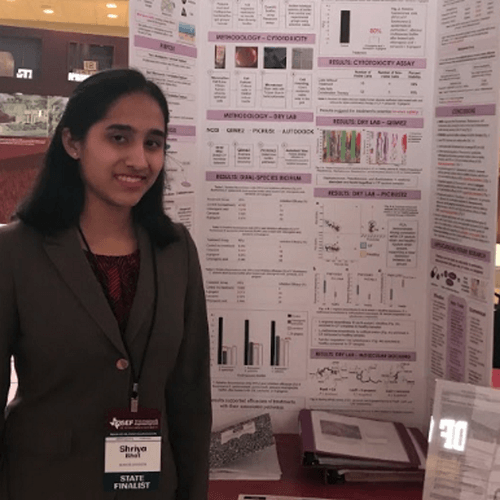
Combating Bacterial Biofilm III: Investigating Quorum Sensing Pathways in Multispecies Biofilm and Developing a Non-toxic Quorum Quenching Cocktail Therapy to Reduce Biofilm Virulence
Dense multi-species bacterial biofilms are resistant to most antibiotics. A combination treatment of FDA-approved quorum quenching agents was devised to target three major interspecies biofilm-pathways, demonstrating near 80% inhibition efficacy on a four-species biofilm complex in-vitro.

iRI Paper Recognition
Unsupervised Machine Learning Approach for Identifying Biomechanical Influences on Protein-Ligand Binding Affinity
Drug discovery is incredibly time-consuming and expensive, and researchers have yet to uncover most of the biochemical properties that make drugs viable. Machine learning was used to reveal which molecular structures were most responsible for viable drugs; the CCCH and CCCCCH molecular fragments were found most responsible.

iRI Paper Recognition
Genetics and Chemotherapy-Induced Peripheral Neuropathy
Chemotherapy-Induced Peripheral Neuropathy (CIPN) is a side effect of chemotherapy that can lead to symptoms ranging from numbness and pain to organ failure or paralysis. By running differential gene expression analysis, 11 genes with a direct connection to CIPN were identified, allowing better-personalized care in deciding which chemotherapy to use.
ISEF 2022 Finalist — 1st Place
Computational Analysis of the Cystic Fibrosis Lung Microbiome and Development of a Non-toxic Quorum Quenching Cocktail Therapy to Inhibit Multispecies Biofilm Proliferation
Bacterial biofilms account for 80% of all chronic microbial infections. A combination treatment of FDA-approved quorum quenching agents was devised to target three major interspecies biofilm-pathways. The combination treatment demonstrated an 80% efficacy in inhibiting a four-species biofilm, supporting delivery as an adjuvant to antibiotics in-vivo.
ISEF 2022 Finalist — 4th Place
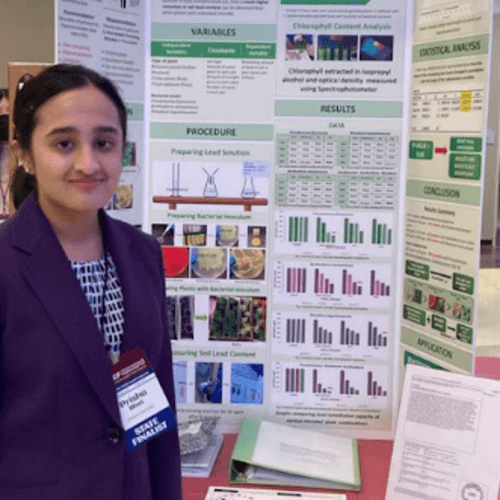
Rhizoremediation: A Computational Analysis of the Rhizosphere Metagenome and a Wet Lab Approach to Derive an Optimal Strategy for Heavy Metal Remediation In-Situ
The EPA reports nearly half a million contaminated sites throughout the US. Rhizoremediation is a promising solution to this global public health concern. Three soil microbes were inoculated in contaminated soil; soil lead content decreased by up to 90% with a triple-microbe combination, with no negative effect on plant health.

ISEF 2022 Finalist — 2nd Place
Assessing the Efficacy of the U.S Endangered Species Act through Analysis of Species Charisma and Respective Population Trends
The U.S Endangered Species Act (ESA) is legislation implemented to repopulate endangered species affected by the ongoing sixth mass extinction. 367 vertebrate species were ranked based on charisma and compared to population trends. Species with higher charisma levels had a greater chance of possessing a beneficial population trend, suggesting a detrimental bias in the ESA's repopulation efforts.
ISEF 2022 Finalist — 3rd Place, STS Finalist 2023
LncRNAs Influence on NK Cells: Potential Therapeutic Target for Neuroblastoma
Neuroblastoma (NB) is the most common extracranial cancer diagnosed in children, representing 6% of pediatric cancer cases yet accounting for 15% of childhood cancer deaths. This study aimed to identify a candidate long non-coding RNA associated with greater survival and increased natural killer cytotoxic tumor responses. A differential gene expression analysis demonstrated that lncRNA RP11-277P12.20 was upregulated in patients with good survival.

iRI Presentation Recognition
Identifying the Potential Roles of Cadherins in a Defective Wnt/B-Catenin Pathway in Hypermobile Ehlers Danlos Syndrome
Hypermobile Ehlers Danlos Syndrome (hEDS) is a rare connective tissue disorder with no known genetic biomarker. The downregulation of cadherin 2 and upregulation of cadherin 11 may cause mechanical stress and inflammation, respectively, which may disrupt Wnt/B-catenin signaling transduction in hEDS patients.

iRI Presentation Recognition
Multiclass Classification of Alzheimer's Disease: MRI Extraction of Cortical Volumetry and Inter-Cortical Ratios as Combined Markers
Clinical diagnostic limitation and progressive severity of Alzheimer's disease necessitates improved earlier detection. This study extracted inter-cortical volumetric ratios as a mode of normalization. The combination of raw volumes and ratios as features achieved the greatest accuracy (81.03%), exceeding state-of-the-art supervised approaches.

iRI Presentation Recognition
Modeling the Onset of Parkinson's Disease: Dopamine Oxidation and Age-Dependent Neuromelanin Accumulation as Combined Multiclass Markers
Parkinson's disease is characterized by the loss of neuromelanin-containing dopaminergic neurons in the substantia nigra. Aminochrome has been suggested as the initial trigger of neurotoxicity. NQO1 expression in the substantia nigra has a negative correlation with age, which could contribute to the increased incidence of Parkinson's in the elderly.

iRI Presentation Recognition
Bioinformatic Analyses Determine Biomarkers for Resistive Small Cell Lung Cancer
Treatment refraction is a hallmark of small cell lung cancer (SCLC), necessitating further research to mitigate poor prognosis. Gene set enrichment analysis (GSEA) was performed to identify upregulated pathways. Reactive oxygen species pathway and TGF Beta Signaling were upregulated, identifying novel genes with promising potential as therapeutic targets to resensitize tumors.

iRI Presentation Recognition
Searching for the Host Galaxy of FRB 181017
Fast radio bursts (FRBs) are millisecond-duration radio wave pulses of unknown astrophysical origins. This study searches for the host galaxy of FRB 181017, proposing a neutron star as a likely origin and narrowing a sample of 13 host candidates to 4 likely galaxies due to their high Hα fluxes and similar sizes to the Milky Way.

iRI Presentation Recognition
Link Between Systemic Lupus Erythematosus and Diffuse Large B Cell Lymphoma to Identify Common Targets for Therapy
The NF-κB signaling pathway has been explored in Systemic Lupus Erythematosus (SLE) and Diffuse Large B Cell Lymphoma (DLBCL). Datasets were analyzed using Cytoscape and highlighted microRNA 21 (mir-21) as a potential therapeutic target due to its inhibitory effects on the PTEN gene, which activates the PI3K/AKT pathway.

iRI Paper Recognition
Detection and Classification of Immature Leukocytes for Diagnosis of Acute Myeloid Leukemia Using Random Forest
Acute Myeloid Leukemia (AML) is a fatal blood cancer that must be detected early for effective treatment, but the diagnosis is time-consuming and inaccurate. This study presents a machine learning model capable of automatic screening for immature blood cells. The proposed model detected immature cells with 92.99% accuracy and classified immature cells into four types with 93.45% accuracy.

2021 Regeneron STS Scholar
Investigating Potential Agro-economic Benefits of Solar Pollinator Habitats
American beekeepers lose approximately 42% of their colonies annually, costing the agro-economy $15 billion each year. This study analyzed the potential benefits of establishing solar-pollinator habitats in the U.S. Highly pollinator-dependent crops were more economically valuable than less-dependent crops, showing potential to provide clean energy while providing habitats for plant and pollinator species.

ISEF 2021 Finalist
Synergy of Treatment: Therapeutic Vulnerabilities in Small Cell Lung Cancer
Small cell lung cancer (SCLC) is the most aggressive form of cancer with a 5-year survival rate of <7%. This study aimed to identify target genes that promote cancer survival and treatment resistance following talazoparib or prexasertib treatment. Bioinformatics analyses demonstrated that AKR1C2 and PRDX1 were upregulated post-treatment.

ISEF 2021 Finalist
Analyzing Water Contaminants Through Image Processing of Chlorophyll-a
Remote sensing of water quality parameters and contaminants is a cheap and efficient alternative to traditional in-situ water sampling methods. Satellite imagery of chlorophyll-a from the MODIS-Aqua satellite was analyzed to determine trends from 2008 to 2020. Significant relationships (p<0.05) were found between chlorophyll-a and cadmium, arsenic, lead, and ammonia nitrate, helping conserve monitoring resources.

ISEF 2021 Finalist — 4th Place Grand Award
CET-CNN: Modular Hierarchical Image Classification Using Conditional-Execution Tree CNNs
Sequential neural network classifiers overgeneralize between classes, therefore a tree-structured architecture was designed - Conditional-Execution Tree Convolutional Neural Network (CET-CNN) - enabling more specialized classification using subunits that classify and process inputs to pass to more subunits. CET-CNN-B's improved accuracy over sequential networks by 8.25%. Single-path execution reduced effective network size by up to 81%.

iRI Presentation Recognition
Predictions of Targeted Gene Therapy Treatment Success in Patients with Non-Small Cell Lung Cancer
Non-Small Cell Lung Cancer (NSCLC) is the leading cause of cancer death worldwide, and Immune Checkpoint Inhibitor (ICI) treatment is only effective in a small percentage of patients. Three machine learning models using genetic features achieved close to 75% accuracy in predicting whether ICI treatment would be effective.

iRI Presentation Recognition
Convolutional Neural Network Models for Classifying Shoulder Images of Musculoskeletal Disorders
Shoulder pain is one of the most common physical injuries, affecting two out of three people at some point in their lives. Three CNN models were used to evaluate ultrasound images, demonstrating potential to assist primary care physicians by increasing diagnostic accuracy and providing rapid preliminary results.

iRI Presentation Recognition
Using Machine Learning to Develop a Global Coral Bleaching Prediction System
Coral bleaching is a fatal process in which corals expel their symbiotic dinoflagellates, and with over 360,000 square miles of coral reefs worldwide, targeting conservation efforts is challenging. A machine learning model was developed to predict global locations at risk for coral bleaching, achieving 95% accuracy.

iRI Presentation Recognition
Identifying Genetic Biomarkers for Diagnosing Essential Tremor
Nearly seven million individuals in the U.S. have Essential Tremor (ET). Differential Gene Expression on ET RNA-seq data identified 86 differentially expressed gene transcripts; after optimization, a Random Forest model predicted ET from control 85% of the time.

iRI Presentation Recognition
A Simple System for Strengthening Visual Representations
Semi-supervised learning involves pretraining models upon large collections of arbitrary data. This study investigates the benefits of applying a learning problem of progressively growing difficulty to contrastive learning approaches like SimCLR, proposing a mechanism for more explicit control over data augmentation strength throughout training.